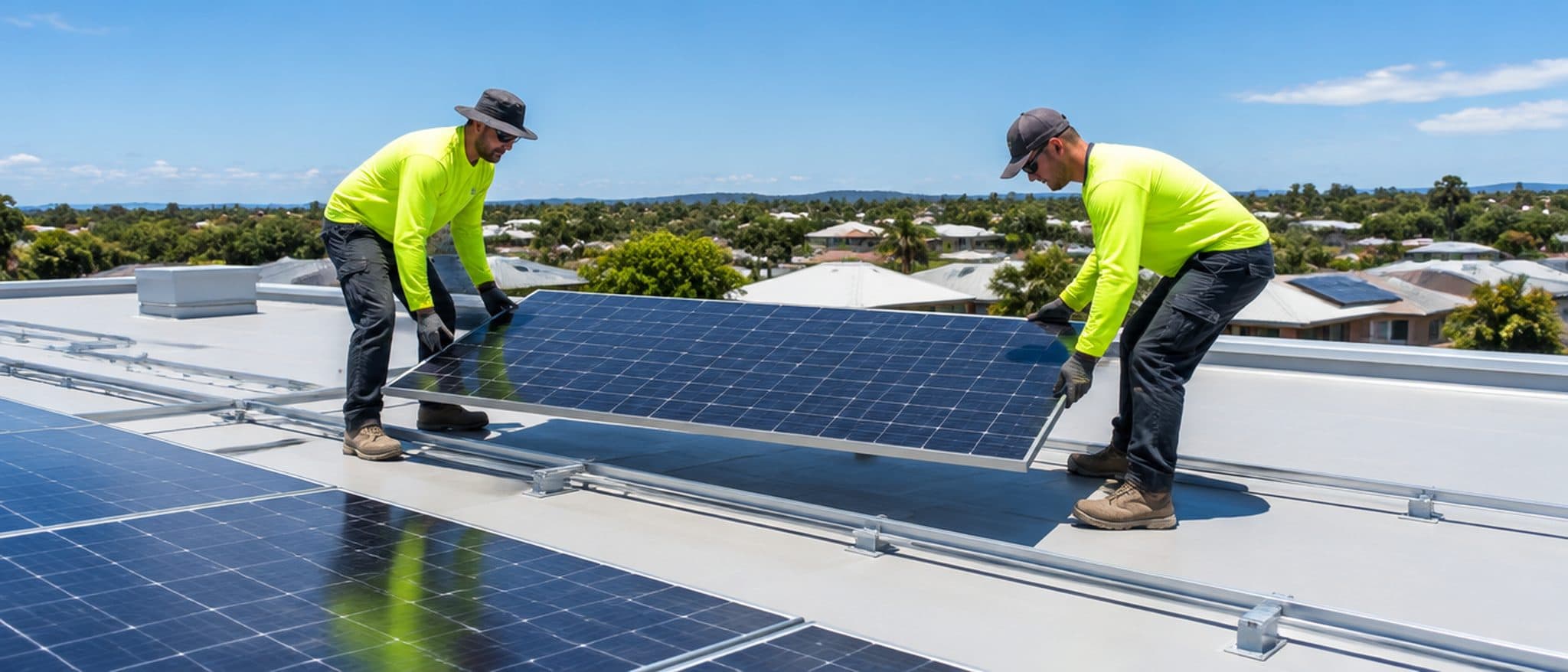
How Solar Panels Generate Electricity
Solar panels work by converting sunlight into direct current (DC) electricity through a process called the photovoltaic effect. Each panel contains dozens of silicon cells that absorb photons from sunlight and release electrons, creating an electrical current.
The Photovoltaic Effect
When sunlight hits a solar cell, it knocks electrons loose from atoms in the silicon. These electrons flow through the cell, generating electricity. This process happens silently, with no moving parts, and produces zero emissions.
From Panel to Powerpoint
The DC electricity produced by your panels flows to an inverter, which converts it into alternating current (AC), the type of electricity your home appliances use. From there, the power flows into your switchboard and is distributed throughout your home.
When your panels produce more electricity than you need, the excess is exported to the grid. Your electricity retailer pays you a feed-in tariff for every kilowatt-hour you export. When your panels aren't producing enough (like at night), you draw power from the grid as normal.
Key Components of a Solar System
Solar Panels
Mounted on your roof, these capture sunlight and convert it into DC electricity. Modern home panels are typically rated between 400W and 500W each.
Inverter
The brain of your system. It converts DC power to AC power and monitors system performance. String inverters and microinverters are the two main types.
Switchboard
Your existing switchboard distributes solar power to your home circuits. A new solar circuit breaker is added during installation.
Smart Meter
A bi-directional meter tracks how much power you consume from the grid and how much you export. Your electricity retailer arranges this.
Do Solar Panels Work on Cloudy Days?
Yes. Solar panels still produce electricity on cloudy days, though at reduced output, typically 10% to 25% of their full capacity depending on cloud thickness. Queensland averages around 280 days of sunshine per year, making it one of the best locations in the world for solar.
Maximise Your Investment
Even on cloudy days, you can maximise your solar savings by running high-energy appliances like washing machines and dishwashers during daylight hours when your panels are still generating.
How Long Do Solar Panels Last?
Modern solar panels come with 25-year performance warranties and are expected to last 30+ years. They degrade slowly over time, typically losing less than 0.5% efficiency per year. After 25 years, most panels still produce over 85% of their original output.