Understanding Solar Rebates
The Australian Government offers financial incentives to encourage the adoption of renewable energy. The primary rebate for residential solar is the Small-scale Technology Certificate (STC) scheme, which significantly reduces the upfront cost of a solar system.
How STCs Work
When you install a solar system, you're entitled to a number of STCs based on the system size, your location (solar zone), and the years remaining until the scheme ends at the close of 2030. These certificates have a monetary value that your installer applies as an upfront discount on your system.
System Is Installed
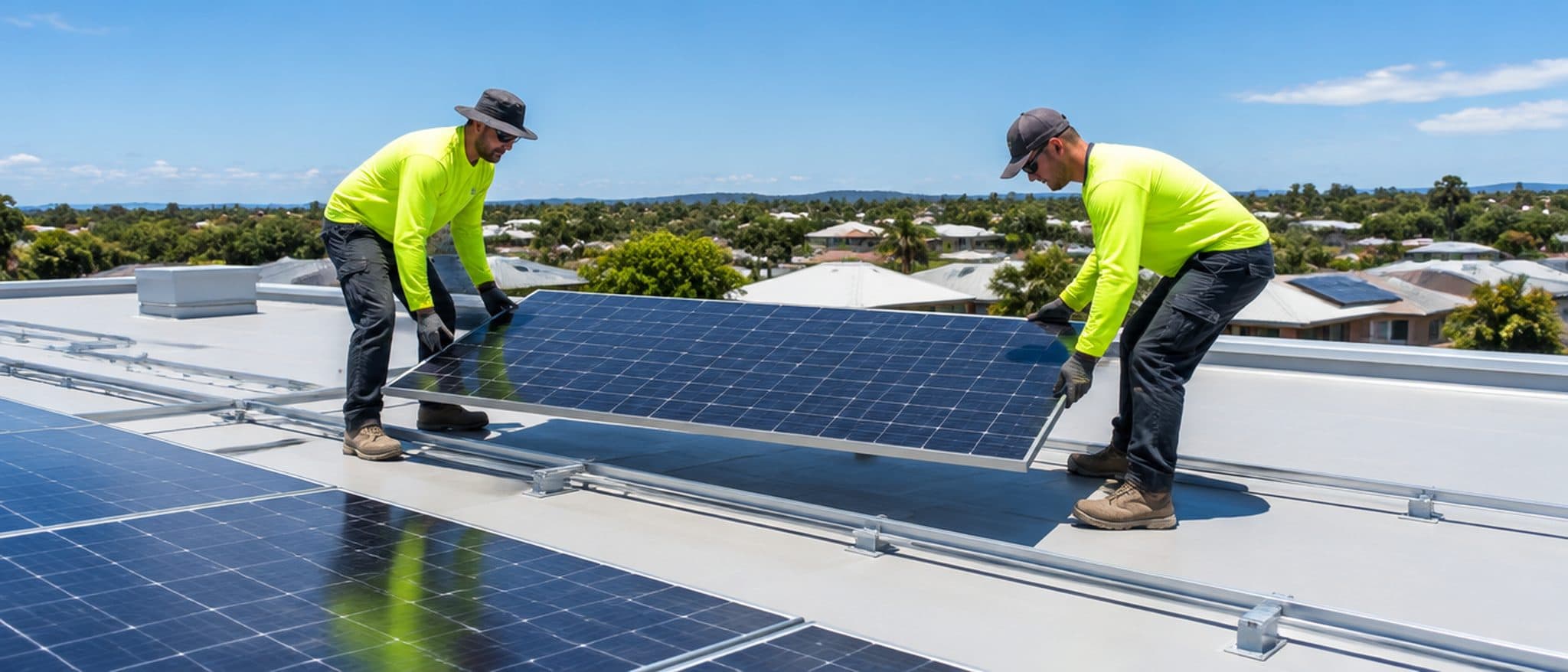
Your installer, who must be accredited by Solar Accreditation Australia (SAA), completes the installation and registers the system with the Clean Energy Regulator.
STCs Are Calculated
The number of certificates is calculated based on system size, location, and remaining scheme years.
Discount Applied
Your installer assigns the STCs and applies the value as a point-of-sale discount. You pay the reduced price upfront.
How Much Is the Rebate?
For a 6.6kW system installed in Brisbane in 2026, the STC rebate is approximately $1,700 to $1,800. It gets smaller every year until the scheme ends in 2030. Most installers, including UV Power, already factor this into the price they quote. Get a quote from UV Power to see your figure.
Queensland-Specific Incentives
Feed-in Tariffs
Queensland doesn't have a government-mandated feed-in tariff, but electricity retailers offer competitive rates for exported solar. Feed-in tariffs in South East Queensland are typically around 5c to 12c per kWh depending on your retailer and plan.
Interest-Free Loans
The Queensland Government periodically offers interest-free loan programs for solar and battery installations. Check the Queensland Government website for current availability, as these programs come and go.
Battery Rebates: the Cheaper Home Batteries Program
There is a federal battery rebate. The Cheaper Home Batteries Program has applied to batteries installed since 1 July 2025, and it works the same way as the solar rebate: your battery earns STCs, and your installer takes their value off the price upfront. You don't apply for anything yourself.
How much is it worth?
The discount depends on your battery's usable capacity and on the date it is installed.
- Batteries installed from 1 May to 31 December 2026 earn 6.8 STCs per usable kWh.
- From 1 January 2027 that drops to 5.7, and it keeps stepping down every six months until the scheme ends in 2030.
- Bigger batteries earn less per extra kWh. The first 14 kWh earn the full rate, 14 to 28 kWh earn 60% of it, 28 to 50 kWh earn 15%, and nothing past 50 kWh earns anything.
At current certificate prices, a 10 kWh battery installed before the end of 2026 attracts a discount of roughly $2,500 to $2,700. The same battery installed in early 2027 attracts about $450 less.
The installation date sets the rate
The rate that applies is the one in force on the day your battery is installed, not the day you sign. If you are weighing it up late in the year, it is worth knowing the rate steps down on 1 January and 1 July.
Who is eligible?
- Your battery must be installed by, or under the supervision of, an installer accredited by Solar Accreditation Australia (SAA).
- The battery and inverter must be on the Clean Energy Council approved list.
- The battery must be connected to solar, either an existing system or one installed at the same time. A battery that only charges from the grid is not eligible.
- Grid-connected batteries must be capable of joining a virtual power plant. You don't have to join one.
- The discount is paid once per home, for batteries between 5 and 100 kWh.
Queensland state battery rebates
Queensland's Battery Booster program has closed, and there is currently no separate state battery rebate. The federal discount above is the one that applies.
Check Your Eligibility
Some incentives are means-tested or have specific eligibility criteria. We can help you navigate what you qualify for during your consultation. Just ask.
The STC Phase-Down Schedule (Approximate)
The STC scheme reduces each year on 1 January. The number of certificates you receive shrinks as the scheme approaches its end at the close of 2030, so a system installed sooner receives a larger rebate.
| Year installed | Approximate rebate (6.6kW, Brisbane) |
|---|---|
| 2026 | ~$1,700 to $1,800 |
| 2027 | ~$1,400 |
| 2028 | ~$1,000 |
| 2029 | ~$700 |
| 2030 | ~$350 |
| 2031 | Nil (scheme ended) |
These figures are approximate. They assume certificates are worth about $38 to $40 each, and the actual value on the day depends on the certificate market and your installer.
Don't Wait Too Long
Each year you delay costs you in two ways: a smaller rebate and another year of paying full-price electricity. The financial case for acting now is compelling.
How UV Power Handles Rebates
We handle all STC paperwork and registration on your behalf. The rebate is applied as an upfront discount: you never need to claim it separately or deal with the Clean Energy Regulator yourself. The price we quote is always the final price after STCs have been applied.