Update, September 2026
This is the ultimate guide to the cost of a 6.6kW solar system in Brisbane, Queensland. In this comprehensive article, we'll explore the benefits of solar power, the components of a 6.6kW system, different brands to suit each budget, and the factors that influence the cost. We'll also provide tips on choosing the best quality panels, understanding the role of the inverter, and the importance of a solar battery. Finally, we'll discuss the average cost of a 6.6kW solar system in Brisbane and share some strategies for finding the best price.
Solar is Not A Hoax: Introduction to Solar Power and Its Benefits
Solar power is a clean, renewable energy source that has gained significant popularity in recent years. By harnessing the sun's energy, homeowners and businesses can reduce their carbon footprint, lower their energy bills, and contribute to a more sustainable future. In Brisbane, Queensland, the sunny climate makes solar power an excellent choice for both residential and commercial properties.
One of the primary benefits of solar power is its ability to generate electricity without producing any greenhouse gas emissions. This not only helps to mitigate the effects of climate change but also reduces our reliance on fossil fuels, which can be both environmentally and economically volatile. Additionally, solar power systems can provide a stable, long-term energy source, shielding homeowners and businesses from fluctuations in electricity prices.
What is a 6.6kW Solar System?
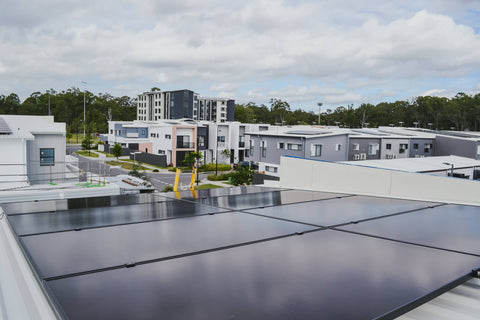
A 6.6kW solar system is a medium-sized solar power system that is well-suited for many residential properties in Brisbane, Queensland. This system typically consists of solar panels, an inverter and, in some cases, a solar battery.
The 6.6kW system is a popular choice for homeowners in Brisbane because it can generate enough electricity to power a significant portion of a household's energy needs, while still remaining a cost-effective investment. This system is often considered a "sweet spot" in terms of size and performance, providing a balance between energy generation, system cost, and available roof space.
Components of a 6.6kW Solar System
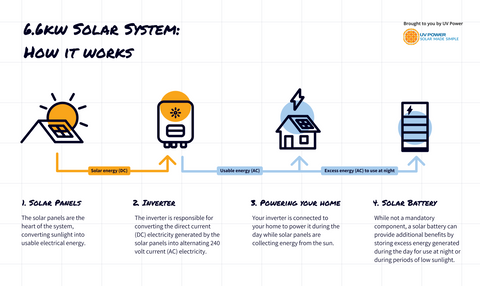
A 6.6kW solar system consists of several key components, each of which plays a vital role in the system's performance and efficiency. These components include:
- Solar Panels: The solar panels are the heart of the system, converting sunlight into usable electrical energy. The quality and efficiency of the panels can have a significant impact on the overall performance of the system.
- Inverter: The inverter is responsible for converting the direct current (DC) electricity generated by the solar panels into alternating current (AC) electricity, which can be used to power your home or fed back into the grid.
- Solar Battery: While not a mandatory component, a solar battery can provide additional benefits by storing excess energy generated during the day for use at night or during periods of low sunlight.
Understanding the role and importance of each of these components is crucial when considering the cost and performance of a 6.6kW solar system in Brisbane.
Common questions about 6.6kW solar systems
Is 6.6kW enough to completely power my home?
Depending on your roof angle and shading profile, a 6.6kW system will produce an average of 26kWh of electricity per day. This amount will fluctuate between 12kWh at the Winter Solstice and up to 40kWh at the Summer Solstice.
In many cases, this system will easily cover your daytime electricity usage. If you have a battery, it should also cover a good percentage of your nighttime usage, especially if you are a smaller user of power. However, we recommend considering a larger system because the future will involve electric vehicles, which will require more energy to power.
Will I have no energy/ electricity/ power bill with a 6.6kW solar system?
This depends on the amount of energy you consume. In most cases, the answer is no. The power companies charge a daily supply fee ranging from 89 cents to $1.30 per day. This will add an additional $120 to each bill. While your energy usage during the day will be covered, you will still need to purchase energy for nighttime, which will not be offset by the excess energy you sell back to the grid.
How many panels are in a 6.6kW system? How much roof area do I need?
If you are installing 440W panels, there are 15 panels required for a 6.6kW system. Each panel occupies approximately 2 square metres, so a total of 30 square metres is needed. However, for a well-designed system with sufficient space for maintenance and cleaning, a minimum of 45 square metres is preferred.
What are the Best Solar Panels?
This is a loaded question and highly subjective. However, when determining the best panels, the most important factors are as determined by Bloomberg New Energy Finance Tier One Listing.
The ranking takes into account various criteria, including:
- Financial stability and reliability
- Production scale
- Successful implementation of large-scale projects
- Sales performance
- Market presence (companies existing for over 5 years are considered)
- Production process stages
- Automation and control
- Product innovation
- Research and development investments
It is important to note that the Bloomberg Tier 1 ranking assesses manufacturers of photovoltaic panels, rather than specific module tests. Nevertheless, the stringent criteria imposed by investors and banks prioritise the safety of investments. Therefore, panels from ranked manufacturers are synonymous with high quality and low failure rates.
The second most important factor is Australian after-sales service and the willingness of companies to honour warranties. Unfortunately, we are finding that more companies are not honouring warranties, which is highly problematic. UV Power uses panel manufacturers with whom we have had long-term relationships and who have a track record in after-sales service. We have listed further down in this article solar panel brands we recommend and that we install regularly.
How much does a 6.6kW system cost in Brisbane? How much money can it save me?
The saying "you get what you pay for" applies to solar systems as well. Cheap systems can leave you with poor components and warranties that are hard to claim on, so compare what is included, not just the price.
At the time of writing (mid 2024), a basic 6.6kW system with a reasonable inverter and panels started in the mid $4000s, and a decent quality system with a hybrid inverter was in the $5000s. The cost can vary depending on factors such as the type of roof, installation complexity, and the condition of your meter board. Each quote is site-specific, so there is no one standard price.
What inverter should I get with a 6.6kW system?
For a 6.6kW system, it is recommended to use a 5kW inverter. This is because of the government rebates and the allowance for additional panels beyond the AC output of the inverter.
To obtain the maximum rebate, the formula allows panels of up to 133% of the inverter output. Therefore, a 5kW inverter multiplied by 1.33 equals 6.6kW of panels. This is a popular choice for a starting system.
What solar battery should I get with a 6.6kW system?
A 6.6kW system produces an average of 26kWh of energy per day. To ensure sufficient storage and night time usage, a 10kWh battery is recommended. With effective energy management, you can consume 60% of the produced energy per day, leaving 10kWh for storage and nighttime usage.
What is the best option for a full 6.6kW system on a budget?
In our opinion, the best option for a 6.6kW system on a budget is the GoodWe DNS 5000 inverter with 15 x 440W JA Solar panels. This entry-level system offers excellent quality without any compromises. Both GoodWe and JA Solar are reputable companies with strong financial backing. If you want an even better option, you can upgrade the inverter to a GoodWe EH 5000, which will provide the capacity for battery storage in the future.
What is the best quality option for a 6.6kW system?
We install a lot of the Fronius Gen 24 Primo 5 inverters, which can have a battery added in the future. Paired with the Aiko Neostar 2 panels, this combination offers high quality with shade resistance and storage possibilities for the future.
If a 6.6kW System is Slightly Too Small, What Option Should I Choose?
We believe that a 6.6kW system is too small for most homes. Over the years, the average size of systems has increased dramatically. In 2023, our average-sized system installed was 10.5kW. We now accommodate households with EV cars, multiple air conditioners, and additional electrical appliances. To future-proof your house, we recommend opting for a larger system.
Factors that Affect the Cost of a 6.6kW Solar System
The cost of a 6.6kW solar system in Brisbane can vary depending on several factors, including:
- Solar Panel Quality: The quality and efficiency of the solar panels used in the system can have a significant impact on the overall cost. Higher-quality panels may have a higher upfront cost but can provide better long-term performance and energy generation.
- Inverter Technology: The type of inverter used in the system, such as a string inverter, hybrid or a microinverter, can also affect the cost. Newer, more advanced inverter technologies may be more expensive but can offer improved efficiency and performance.
- Solar Battery Inclusion: The decision to include a solar battery in the system can significantly impact the overall cost, as batteries can be a significant investment.
- Installation Complexity: The complexity of the installation, such as the roof type, shading, and other site-specific factors, can also influence the final cost of the system.
- Government Incentives and Rebates: In Brisbane, homeowners may be eligible for various government incentives and rebates, such as the Small-scale Technology Certificates (STCs), which can help offset the upfront cost of the solar system.
Understanding these factors can help you make an informed decision when choosing the best 6.6kW solar system for your home in Brisbane. You can text us on 0483 939 073 if you have any questions, including what to expect with upfront costs or discounted green loans (at the time of writing, these were offered through the federal Household Energy Upgrades Fund).
Choosing the Best Quality Panels for a 6.6kW Solar System
When it comes to a 6.6kW solar system, the quality of the solar panels is crucial. Investing in high-quality panels can provide several benefits, including:
- Improved energy generation: Higher-quality panels are typically more efficient at converting sunlight into electricity, resulting in greater energy output.
- Longer lifespan: Well-made panels are designed to withstand the elements and maintain their performance for a longer period, often with warranties of 25 years or more.
- Enhanced system reliability: Choosing reputable panel manufacturers can help ensure the long-term stability and performance of your solar system.
When selecting the best panels for your 6.6kW system in Brisbane, it's important to research the reputation and track record of the manufacturer, as well as the specific features and efficiency ratings of the panels. While higher-quality panels may have a higher upfront cost, the long-term benefits can make them a wise investment.
The Best Quality Panels we recommend for a 6.6kW Home Solar System
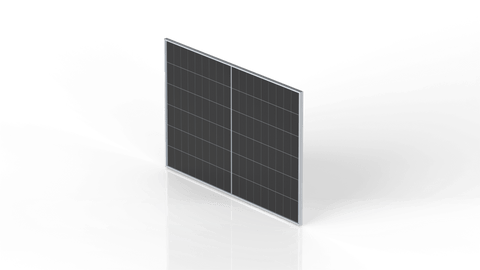
Aiko: Revolutionising the Australian Solar Market
Aiko, a fresh entrant in the Australian market, is set to rapidly ascend as a frontrunner. The rise in popularity is primarily attributed to the cutting-edge technological innovations embedded in their design. Aiko's strategic placement of bus bars at the rear of the cell translates to heightened cell efficiency and enhanced shade tolerance.
In a recent evaluation of various panel brands in shaded environments, Aiko emerged as the top performer, surpassing all others. Consequently, opting for Aiko panels proves to be a lucrative investment for shaded rooftops, promising to significantly boost your energy yield.
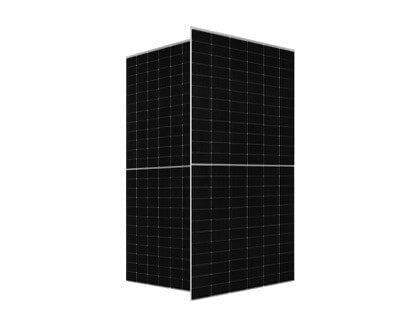
JA Solar: Reliability and Quality
JA Solar holds a prominent position in the solar panels industry, and our partnership with them dates back to 2009, fostering a longstanding relationship.
The foundation of any successful business relationship is trust. We have full confidence in JA Solar's support to promptly address any issues that may arise, ensuring swift resolutions for our customers. Remarkably, since we started installing solar panels in 2009, we have not encountered a single problem with JA Solar panels.
Among the mid-range panel offerings we have installed, the new model double glass panel has proven to be the optimal choice, standing out as the best option for our customers.
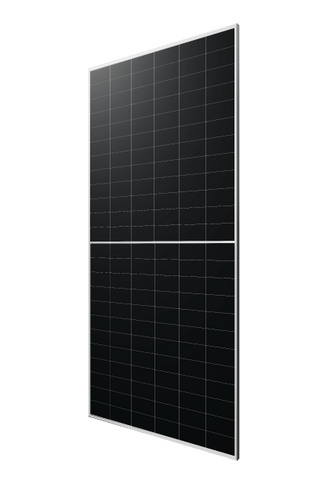
Longi: A Dependable Alternative
Longi stands out as a key player in the solar industry, renowned for producing top-notch solar panels. Should there be a scarcity of JA solar panels, Longi can be relied upon as a dependable alternative.
Text us on 0483 939 073 for a customised quote on a 6.6kW system with Aiko, JA Solar or Longi panels, straight to your SMS inbox.
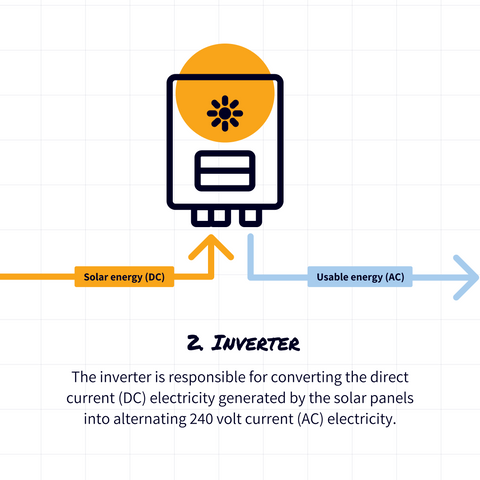
Understanding the Role of the Inverter in a 6.6kW Solar System
The inverter is a critical component of a 6.6kW solar system, as it is responsible for converting the direct current (DC) electricity generated by the solar panels into alternating current 240 volt (AC) electricity, which can be used to power your home or fed back into the grid.
The type of inverter you choose can have a significant impact on the overall performance and efficiency of your solar system. Some key factors to consider when selecting an inverter include:
- Efficiency: Look for inverters with high conversion efficiency, as this can maximise the energy output of your solar system.
- Reliability: Choose an inverter from a reputable manufacturer with a proven track record of reliability and durability.
- Compatibility: Ensure the inverter is compatible with your solar panels and other system components.
- Features: Consider additional features, such as monitoring capabilities and remote access, which can help you optimise the performance of your system.
Investing in a high-quality inverter can help ensure the long-term performance and reliability of your 6.6kW solar system in Brisbane.
The Best Quality inverter brands we recommend for a 6.6kW Home Solar System
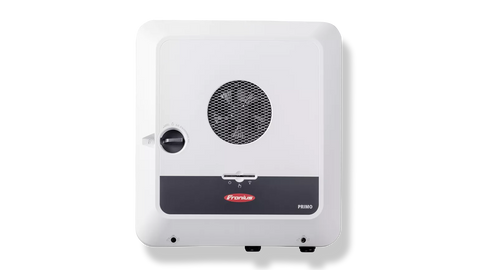
Fronius: A Provider of High-Quality Inverters and Car Chargers
Fronius, an esteemed Austrian company, specialises in delivering a diverse range of top-notch inverters and car chargers. Renowned for their exceptional design and craftsmanship, Fronius products uphold a standard of quality that sets them apart in the market. However, their customer service is rated as average.
Fronius' Gen 24 inverters are designed to seamlessly integrate with BYD solar batteries, offering a convenient upgrade option and ensuring the future readiness of your home.
Historically, Fronius inverters were the preferred choice, featuring in 80% of our projects due to their outstanding performance in comparison to Chinese alternatives. Nevertheless, the emergence of new models of GoodWe hybrid inverters has led to a decrease in our preference towards Fronius, now accounting for only 30% of our installations.
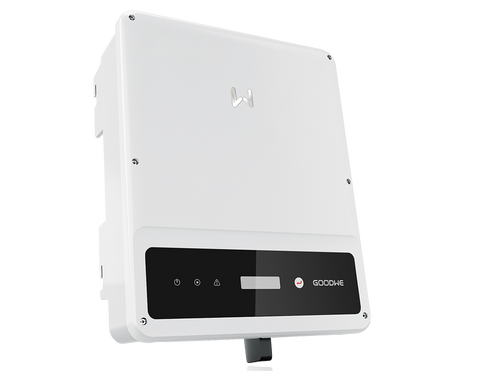
GoodWe: The Ideal Choice for Chinese-Made Inverters
GoodWe stands out as the premier choice among Chinese-made inverters due to their superior craftsmanship, appealing designs, and exceptional post-purchase support. However, when evaluating inverters, it's crucial to recognise their varying capabilities. Selecting the right model is essential for future-proofing your investment.
- The Single Phase EH model, albeit slightly pricier than the standard inverter, offers the option of battery inclusion through a software unlock code. This code can be obtained when adding batteries to the system.
- The Three Phase ET models support plug-and-play battery installation. Investing a little more now ensures greater flexibility and expanded options in the future.
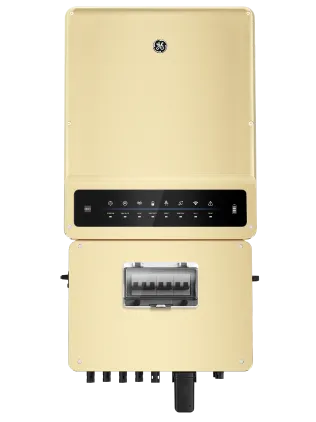
General Electric: no longer available
GE-branded inverters were made by GoodWe under licence, and for several years the GEH series of single-phase hybrid inverters was our best seller.
GoodWe stopped selling GE-branded products in late 2024, so the GEH is no longer an option for a new system. Existing warranties are still honoured, and there is an open safety recall on the series. If you already own one, our GE GEH owner page explains what to check.
For a new hybrid inverter today we would point you at GoodWe or Sigenergy.
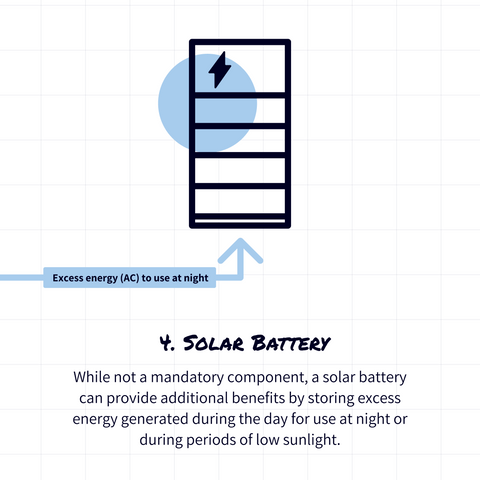
The Importance of a Solar Battery for a 6.6kW System
While not a mandatory component, a solar battery can provide significant benefits for a 6.6kW solar system in Brisbane. By storing excess energy generated during the day, a solar battery can allow you to use this energy at night or during periods of low sunlight, reducing your reliance on the grid and potentially lowering your electricity bills even further.
Some of the key advantages of including a solar battery in your 6.6kW system include:
- Increased self-consumption: By storing and using your own solar-generated electricity, you can reduce your grid electricity consumption and associated costs.
- Improved energy independence: A solar battery can help you become less dependent on the grid, providing a sense of energy security and resilience.
- Backup power: In the event of a grid outage, a solar battery can provide backup power to your home, ensuring you maintain access to electricity.
When selecting a solar battery for your 6.6kW system, consider factors such as the battery's capacity, efficiency, and compatibility with your solar panels and inverter. Investing in a high-quality solar battery can be a valuable addition to your 6.6kW solar system in Brisbane.
Average Cost of a 6.6kW Solar System in Brisbane
The average cost of a 6.6kW solar system in Brisbane can vary depending on the factors mentioned earlier, but as a general guideline, at the time of writing (mid 2024) a complete basic system, including the solar panels, inverter and installation, started in the mid $4000s, with higher-quality panels and hybrid inverters costing more.
It's important to note that this is just a rough estimate, and the actual cost may be higher or lower depending on your specific requirements and the quality of the components you choose. Additionally, government incentives and rebates, such as the Small-scale Technology Certificates (STCs), can help offset the upfront cost of the system, making it a more affordable investment.
Tips for Finding the Best Price for a 6.6kW Solar System
To ensure you get the best value for your money when investing in a 6.6kW solar system in Brisbane, consider the following tips:
- Compare Quotes: Reach out to multiple solar installers and compare their quotes. This will help you identify the most competitive prices and ensure you're getting the best deal. You can request a free quote from the team at UV Power here.
- Negotiate: Don't be afraid to negotiate with solar installers. Many companies may be willing to offer discounts or additional incentives to secure your business.
- Consider Government Incentives: Take advantage of the available government incentives and rebates, such as the Small-scale Technology Certificates (STCs), to reduce the overall cost of your solar system.
- Timing: The cost of solar systems can fluctuate over time, so it's worth keeping an eye on the market and timing your purchase accordingly.
- Research Reputable Installers: Choose a solar installer with a proven track record of quality workmanship and customer satisfaction to ensure you get the best value for your investment.
By following these tips, you can find the best price for a high-quality 6.6kW solar system in Brisbane and maximise the long-term benefits of your investment.
Conclusion and Final Thoughts
In conclusion, a 6.6kW solar system can be an excellent investment for homeowners in Brisbane, Queensland, but a 10.5kW solar system will better suit the needs of most Queenslanders. By harnessing the abundant sunshine, you can generate clean, renewable energy, reduce your carbon footprint, and potentially lower your electricity bills.
When considering a 6.6kW solar system, it's important to carefully evaluate the quality of the solar panels, the efficiency of the inverter, and the potential benefits of including a solar battery. By understanding the factors that influence the cost of the system and following the tips outlined in this guide, you can find the best value for your investment and enjoy the long-term rewards of solar power.
Contact us for a quote on a 6.6kW solar system, call us on 1300 887 140 or text us on 0483 939 073.